Mark Shneerson – in memory of father and grandfather

The man who built the city
The life of an architect, war, work, and the city he stayed in
War
Frontline fate, sapper routines, memory of the hard roads of war and the people with whom it was lived.

ARCHITECTURE
Projects, buildings, and ideas created in peacetime for a living, growing city.

The person
Recollections of family, students, and colleagues—about character, honesty, and an attitude toward life.
ABOUT THIS SITE
This site was created in memory of a father and grandfather.
It is not an official archive or an academic work.
Here are collected memories, documents, photographs, and projects that help reveal not only a profession, but also a person.
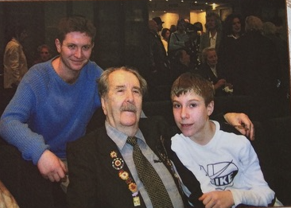
Mark Borisovich (1915–2010) went through the war as a sapper, returned to a devastated city, and devoted himself to architecture. He worked carefully and calmly, and many of his buildings remain part of the city’s life to this day. Architecture was, for him, a continuation of human labor and responsibility; he maintained the same approach in his teaching.
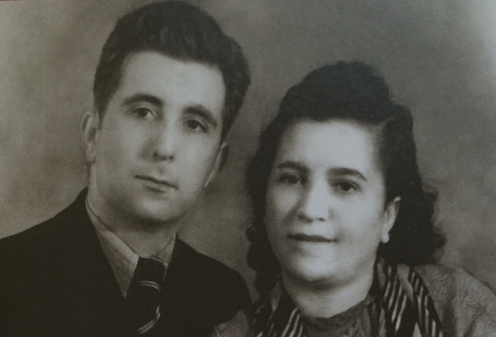
Mark (Mordechai) Shneerson came from a family connected to the Shneerson dynasty and the familial line of Menachem Mendel Shneerson (the 7th Lubavitcher Rebbe). The families lived next to each other in Yekaterinoslav, now Dnipro, and in the late 1980s contact was re-established through correspondence and intermediaries, including an invitation for Mark to move to New York, which he declined.
From here on, this site begins the story of his life, his work, and the time in which he lived.
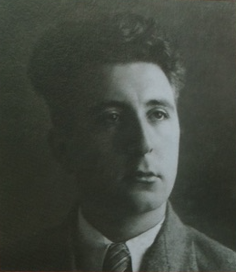
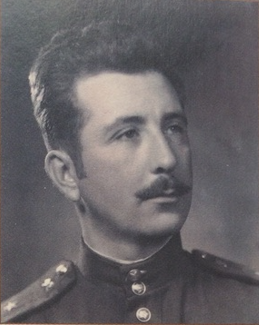
Before the war
Mark Shneerson was born at the beginning of the twentieth century and grew up in an ordinary urban family. From an early age, he began to draw and to take an interest in how houses and streets were arranged. What attracted him was not the outward beauty of architecture, but the logic of space and the way people live within it.
In the late 1930s, he was studying and spending long hours over drawings. Architecture demanded discipline and precision, which suited his character. He was calm, attentive, and disliked haste. Even then, it was important to him to do his work carefully and see it through to the end.
The future seemed clear: education, a profession, a city in which he could build and live. This peaceful part of life proved to be short.
In the summer of 1941, everything changed…
War
The military biography of Mark Borisovich Shneerson began even before he completed his architectural education. In the late 1930s, he became involved in the events of the Soviet–Finnish War. This early military experience was his first encounter with the reality of the front line and demanded the utmost focus and discipline. He later recalled this period as the moment when engineering thinking first became directly connected with responsibility for the lives of others.
With the outbreak of the Great Patriotic War in 1941, Mark Borisovich volunteered for the front. Although students of construction and architectural institutes were usually exempt from conscription, he made this decision on his own. Given his engineering background, he was assigned to sapper (combat engineer) units, where precision and caution were of decisive importance.
One of his first assignments was participation in the construction of a crossing over the Aras River. This bridge enabled Red Army units to enter Iran in August 1941. The operation had strategic significance: Soviet leadership feared that Germany might attempt to reach the Baku oil fields through Iranian territory. The crossing had to withstand tanks, artillery, and motor vehicles and was built under difficult mountainous conditions and within a very tight timeframe.
After the unit was redeployed to Ukraine, the nature of sapper service changed constantly. During periods of retreat, they mined roads and blew up bridges to delay the enemy’s advance. Often it was the sappers who remained last before the approaching enemy units. With the beginning of offensive operations, the tasks were reversed: roads and settlements had to be cleared of mines, and crossings urgently restored. Sappers were frequently the first to come under fire from both sides.
During one operation, a German bouncing mine exploded in close proximity. Mark Borisovich suffered a severe concussion and was evacuated to a hospital. He later wrote that it was precisely in such moments that the price of every mistake is felt most acutely, because others always follow behind the sapper.
In 1943, he took part in the battles of the Kursk Salient. The Battle of Kursk is considered one of the key battles of World War II and the largest tank battle in history. Victory in this area marked a strategic turning point in the war on the Eastern Front and finally transferred the initiative to the Red Army. After Kursk, the systematic liberation of occupied territories began.
Subsequently, Mark Borisovich participated in the liberation of Ukraine and Poland. A separate chapter of his front-line biography was his involvement in the work of a commission investigating Nazi crimes. In the town of Slavuta in the Kamianets-Podilskyi region, he was present during the exhumation of a mass grave of civilians. He later described this episode as one of the most harrowing experiences of the entire war.
During the fighting in Poland, the sapper company under Mark Borisovich’s command took part in the liberation of Częstochowa. At the request of the Polish side, he was tasked with demining the Jasna Góra Monastery, which housed the icon of Our Lady of Częstochowa, revered as a national shrine of Poland. During a meticulous inspection, concealed aerial bombs were discovered beneath the altar, intended to destroy the monastery during the retreat. The detonators were neutralized, and the shrine was saved.
By the end of the war, Mark Borisovich Shneerson held the rank of Guards Major and served as chief of engineering service of a division. He took part in the battles at the Seelow Heights and in Berlin. His front-line journey ended in May 1945.
This experience defined his later life. After demobilization, he returned to the profession of architect with a heightened sense of responsibility for the strength, reliability, and durability of everything created for people. In his understanding, architecture became a continuation of the same principle that had taken shape during the war: safety and service come first; everything else is secondary.
From the memoirs of Mark Schneerson
“Precisely at four o’clock in the morning, quietly, without artillery preparation or loud commands, we rushed into the water to set up a crossing from boats, logs, and secured cables. Already twenty-five minutes later, cavalry, infantry, and military transport began to cross.”
“A sapper has no right to make a mistake. Others follow behind him. And you are responsible not only for yourself.”
The Return
In the spring of 1945, Mark Borisovich returned to Dnepropetrovsk. In his memoirs, he wrote that as he stepped out of the railway carriage, he looked around in confusion. The station was gone. Before him were ruins: building façades scorched black, piles of bricks, and empty window sockets. This was how his native city appeared to him.
In the first postwar years, construction took place under conditions of acute shortages of materials and time. Schools, dormitories, clinics, and factory buildings had to be restored quickly. The architecture of that period could not be ceremonial. It had to be reliable and clear.
After demobilization, Mark Borisovich returned to his profession and began working in the design organizations of Dnepropetrovsk. He took part in the city’s reconstruction and soon found himself among the specialists entrusted with complex and responsible projects. His frontline experience helped him work under conditions of limited resources and strict deadlines.
It was during this period that he felt especially keenly the architect’s responsibility for human life. He wrote that after the war, architecture had become a matter of conscience. Buildings had to be constructed so that they would serve for a long time and not fail the people who depended on them.
These postwar years became a time of formation for him as a city architect. It was here that his professional principles took shape, principles he carried with him throughout all his later work.
From the memoirs of Mark Schneerson
“I remember well my return to Dnepropetrovsk after the war. When I stepped out of the railway carriage, for a moment I did not even understand where I was. The station was gone. All around were ruins. The façades of buildings were scorched, the windows empty, the streets unusually quiet.
The city was wounded and seemed чужим. But it was precisely here that I returned, and it was precisely here that everything had to begin again. There was a great deal of work. There was a shortage of materials, a shortage of people, a shortage of time. It was necessary to build quickly and reliably, because people had nowhere to live, nowhere to receive treatment, nowhere to study.
After the front, I related to responsibility differently. I knew that behind every decision there were human lives. Architecture ceased to be just a profession for me. It became a continuation of the experience I had gained during the war.
In those years I understood that beauty in architecture is impossible without honesty. A building must first and foremost serve people. Everything else is secondary.”
The Architect
After returning to civilian life, Mark Borisovich Shneerson began working in the design organizations of Dnepropetrovsk. In the postwar years, the city was undergoing active reconstruction, and architecture addressed primarily practical tasks. It was necessary to design housing, public buildings, educational facilities, and industrial structures under conditions of material shortages and strict deadlines.
The book notes that he took part both in individual projects and in the comprehensive development of urban residential blocks. His work included developing layouts, façade solutions, and integrating buildings into the existing urban fabric. He paid particular attention to functionality, natural lighting, and ease of use.
Over time, Mark Borisovich was entrusted with more complex and responsible projects. He held leadership positions within architectural and design teams, served on professional commissions, and participated in discussions of urban planning decisions. The book emphasizes that his opinion was often taken into account when key decisions were made.
He was critical of a formalistic approach to architecture and rejected formulaic solutions. Decorative effects for their own sake did not satisfy him. He believed that a building should be logical, durable, and honest in relation to both people and the city. This often led to debates, but he was able to defend his position with clear and reasoned arguments.
Mark Borisovich’s architectural career spanned several decades. Many buildings created with his participation became part of the city’s everyday environment and continued to serve their purpose without losing functionality. For him, architecture always remained a responsible form of labor, not a means of self-expression.
From a colleague’s memoirs
“It was impossible to work with Mark Borisovich in a purely formal way. He always asked how a building would live in ten or twenty years. What interested him was not approval for the sake of a checkbox, but the result. If he took on a project, you could be sure he would see it through to the end.”
The Teacher
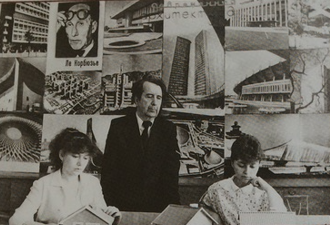
Teaching became an important part of Mark Borisovich Shneerson’s life. For many years, he taught architectural disciplines, combining work in design organizations with the education of students. For him, this was not an addition to the profession, but its natural continuation.
The book notes that he approached teaching with great responsibility. He demanded precision in drawings, the ability to justify decisions, and careful attention to each task. A formal approach and superficial answers did not satisfy him. A student had to understand why a particular architectural decision was being made.
Mark Borisovich did not impose his own style and did not seek external authority. He preferred calm discussion and consistent work on mistakes. His comments were brief but precise, and often led students to reconsider an entire project.
Many of his students recalled that he taught not only the profession, but also an attitude toward it. Architecture, in his view, began with respect for people and responsibility for the result. This approach he consistently passed on to those he worked with.
Over the years of teaching, dozens of students passed through his studio and classes. For many of them, he remained not just a teacher, but a mentor whose principles continued to influence their work in the professional world.
From a student’s memoirs
“He never raised his voice or relied on authority. If a project was weak, he would simply suggest thinking it through once more. Over time, it became clear that for him the most important thing was not effect, but the architect’s responsibility for everything he does.”
The Person
Behind the professional biography of Mark Borisovich Shneerson stood a man with a very distinct character. Reserved and sparing with words, he did not like to draw attention to himself and avoided loud judgments. For him, the substance of the work mattered more than talk about it.
In the recollections of family members and colleagues, he appears as a person of inner discipline. He valued order, precision, and accuracy, both in his work and in everyday life. Habits formed during the war and through his profession stayed with him forever. He did not tolerate carelessness or a formal attitude, yet he never applied pressure and never raised his voice.
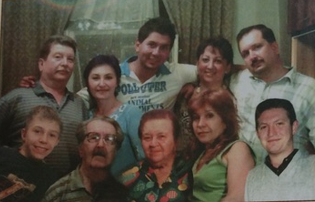
Within the family, he was calm and reliable. He knew how to listen and rarely spoke unnecessarily. His care for those close to him was expressed not in words, but in actions and constant attentiveness. Work occupied an important place in his life, but it never became an end in itself or a cause of detachment.
Even outside his profession, he remained an architect in the way he thought. He paid close attention to the space around him, to details, and to how everyday life was organized. Everything had to be thought through and have meaning. Fuss and ostentation tired him.
Those who knew him well remembered above all not his positions or awards, but his quiet confidence, honesty, and sense of responsibility. It was this human scale that formed the foundation of everything he did, both in his profession and in his life.
Grandson’s Recollections
“He was a man of action. He did not like to talk about himself and almost never emphasized his achievements. If he did something, he considered it simply a duty. For me, he always remained a calm, reliable, and very attentive person, someone whose presence gave a sense of confidence.”
Continuation
This story does not end with the last page. The memory of a person lives not only in documents, projects, and photographs, but also in the way his work and his attitude toward life continue to resonate in others.
The buildings created with the participation of Mark Borisovich Shneerson remain part of the city and continue to serve their purpose. His students work in the profession, passing on the principles he considered important. Within the family, memories are preserved in which he remains not an architect or a teacher, but simply a close and beloved person.
This site was created as an attempt to preserve and convey that memory. Not as a summing up, but as a continuation of a conversation. For those who knew him personally, and for those who are only now discovering this story.
The continuation is possible as long as there is attention, interest, and respect for the path that was taken. That is why this story remains open.
The Book of Memory
We invite you to open the source book, where the details of the life of Mark Borisovich Shneerson are collected and on which this site is based. The publication is in Russian.
לזכרו באהבה מרק שניאורסון ז״ל
This Is How He Is Remembered
Anna Markovna, daughter:
“He rarely spoke about the war and almost never about his achievements. But he remembered with great precision the people he worked with and was always interested in how their lives were unfolding. For him, this mattered more than any awards.”
A colleague from the architectural design office:
“He knew how to calmly stand by his decision, without pressure and without arguments. If he was confident in a project, he simply continued doing his work, and over time it became clear that he was right.”
From his students:
“He treated students seriously, neither condescendingly nor formally. If he saw genuine interest, he was willing to stay after class and explain for as long as necessary.”
Publications on Life and Work
Years of Life
1915–2010
Architect
Frontline Soldier
Teacher

This site was created in memory of Mark Borisovich Shneerson
Project
Biography
Family Archive
Memoirs